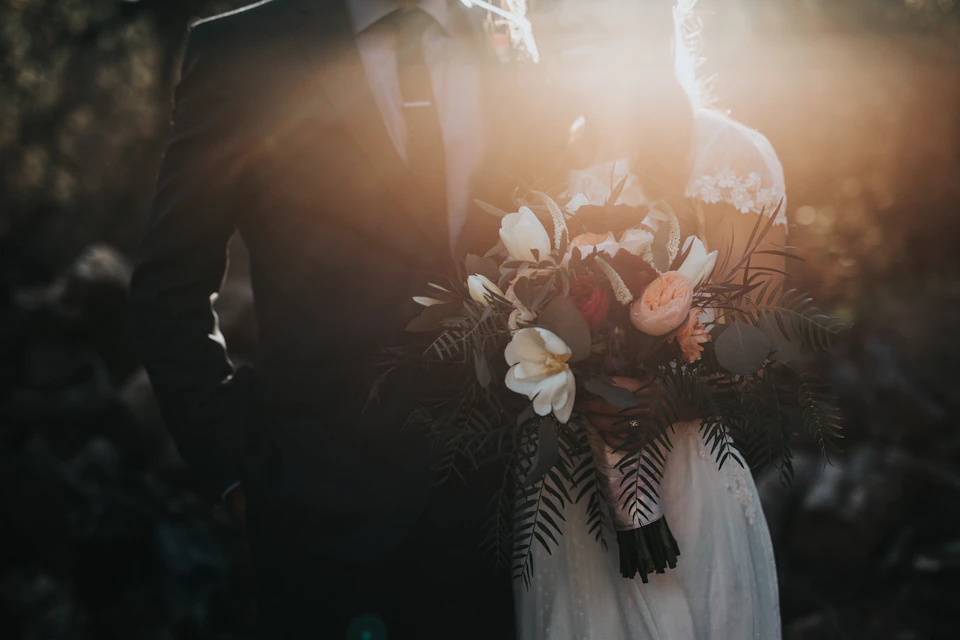
Seven moments deserve to be filmed at a wedding: the first look, the entrance, the vows, the exit from the ceremony, the speeches, the first dance and the end of the night. These are the ones you live from the inside, without ever being able to watch them from the outside.
On your wedding day, you’re at the centre of everything. And that’s precisely why you miss half of it.
1. The first look
The moment your partner sees you for the first time. Their face changes. Their eyes shine. You, you’re walking. You don’t see that reaction. The film keeps it.
How I film it: I stand on the side of the one who is waiting, never on the side of the one arriving. What I want is the reaction. If you choose a private first look before the ceremony, I only ask you where you’d like it to happen. Then I keep quiet.
2. Your parents’ faces
Your mother holding back tears. Your father clenching his jaw so as not to break. Those faces, you won’t see them from the altar. But they’re there, in the film, forever.
How I film it: during the ceremony, I don’t stay fixed on you. I film the front row, often with a long lens, from the side. Your parents don’t know I’m watching them. That’s why their faces are true.
3. The words you forget
You spent nights writing your vows. And on the day, the emotion is so strong that you won’t remember everything you said. A film keeps every word.
How I film it: with discreet wireless microphones placed before the ceremony, and a Sennheiser MKE 600 for ambience. The sound of the vows cannot be recovered. It’s the only moment of the day when I check my equipment twice.
4. Behind the scenes of the preparations
The excitement, the fits of laughter, the small stresses. The moment when everyone is still in a dressing gown and the day hasn’t started yet. It’s often the most touching part of the film.
How I film it: I arrive, I introduce myself, and I settle in a corner. I film the hands doing up buttons, the glances in the mirror, the words between a mother and her daughter. Nobody needs to pay attention to me.
5. The reactions during the speeches
You’re sitting, you’re listening. But around you, faces are crumpling with laughter or tears. Those reactions from your loved ones are a treasure only a film can keep.
How I film it: I take the sound directly from the sound system or with a microphone placed near the speaker. Then I turn my back on the speaker for a good part of the time. The speech, I have in sound. What I’m looking for on screen is the faces of the people listening.
6. The first dance seen from the outside
When you dance, you’re in your bubble. You don’t see the tender looks around you. The film gives you that perspective.
How I film it: I go around the dance floor during the song, with no added light. A pass on you, a pass on the circle of guests, back to you. Three minutes, and three points of view you didn’t have.
7. The end of the night
The loosened ties. The abandoned shoes. The last ones dancing. Those moments when everyone has let go: that’s where the most sincere memories hide.
How I film it: from the edges of the dance floor, discreetly. The DJ’s lights are enough. These are often the last images of the film, and the happiest.
Moment by moment: where I stand, what to plan
| Moment | Where I stand | What you can plan |
|---|---|---|
| The first look | On the side of the one waiting | A quiet spot, with no people passing |
| The entrance | Facing the aisle, then towards the front row | Tell the officiant where I’ll be |
| The vows | At a distance, mics placed beforehand | Send me the order of the ceremony |
| The exit from the ceremony | In front, walking backwards | A guard of honour, petals, or nothing at all |
| The speeches | Near the sound system, then facing the guests | Tell me who speaks and when |
| The first dance | Around the dance floor | A clear floor, with no tables in the middle |
| The end of the night | On the edges of the dance floor | Nothing, precisely |
How I organise myself so as not to miss anything
These seven moments have one thing in common. They last only a few seconds, and they give no warning. To be in the right place at the right time, I don’t rely on luck.
A few weeks before the wedding, I send you a timeline template to adapt. On it, I note the times of the key moments: the first look, the ceremony, the speeches, the first dance. One week before, we go over it together to confirm the times and the places. On the day, I know where to stand before the moment arrives.
I film alone, from several angles, with a compact camera. I don’t need a crew to cover these moments. I need to know when they’re coming, and to be forgotten the rest of the time.
And the moments we don’t film
There are also moments I choose not to film. A last-minute argument during the preparations. A guest who has drunk too much. A tear that isn’t one of joy. The film tells your day the way you’ll want to remember it, not the way a reporter would see it.
If a moment belongs to you, tell me and I’ll put the camera down. A prayer, a letter read together, a word with an absent parent. Being able to film everything doesn’t mean everything should be filmed.
What you’ll finally see
These seven moments, you lived from the inside. The film gives them back to you from the outside, with the sound, eight to twelve weeks after the wedding. To see what that looks like, watch a few recent films and look out for those moments. Then let’s talk about your day: I’ll tell you which ones will be possible, and how to prepare them.
Frequently asked questions
Should we plan a first look before the ceremony for the film?
It is not compulsory, but it is a very strong moment on screen. A private first look, before the ceremony, gives an intimate reaction with no audience. If you prefer to see each other for the first time in the aisle, the reaction will be just as beautiful, simply shared with your guests. Both film very well.
How are the vows recorded?
With discreet wireless microphones, placed before the ceremony, and a directional microphone for ambience. The camera's built-in microphone is never enough: too far away, too much echo. Thanks to these mics, every word is in the film, including the ones said quietly. It is often what couples listen to again the most.
How late should the evening be filmed?
It depends on the collection: 6, 10 or 14 hours of coverage. To have the end of the night in the film, you need the longest collection, which runs from waking up to the small hours. Otherwise, I stay until the first dance or part of the dancing. We decide together which moment is most useful.
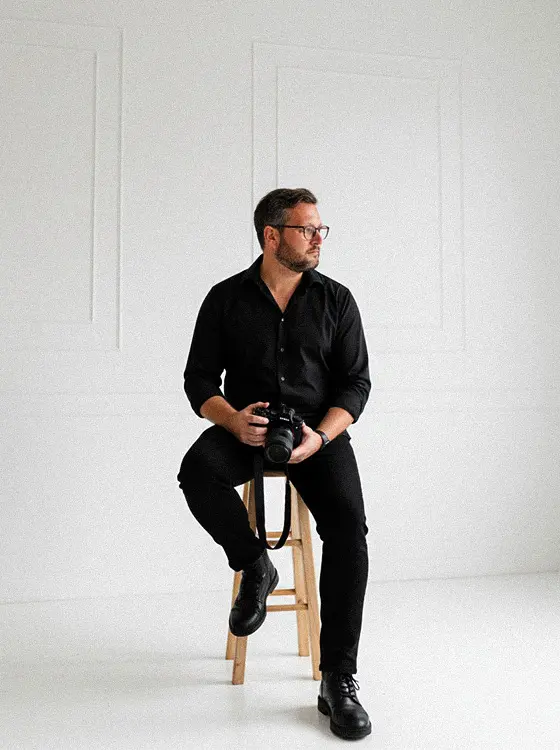
Mickaël Frigout
Wedding videographer based in Nantes. Over 70 weddings filmed in 5+ years. I tell love stories through images, with discretion and sensitivity.