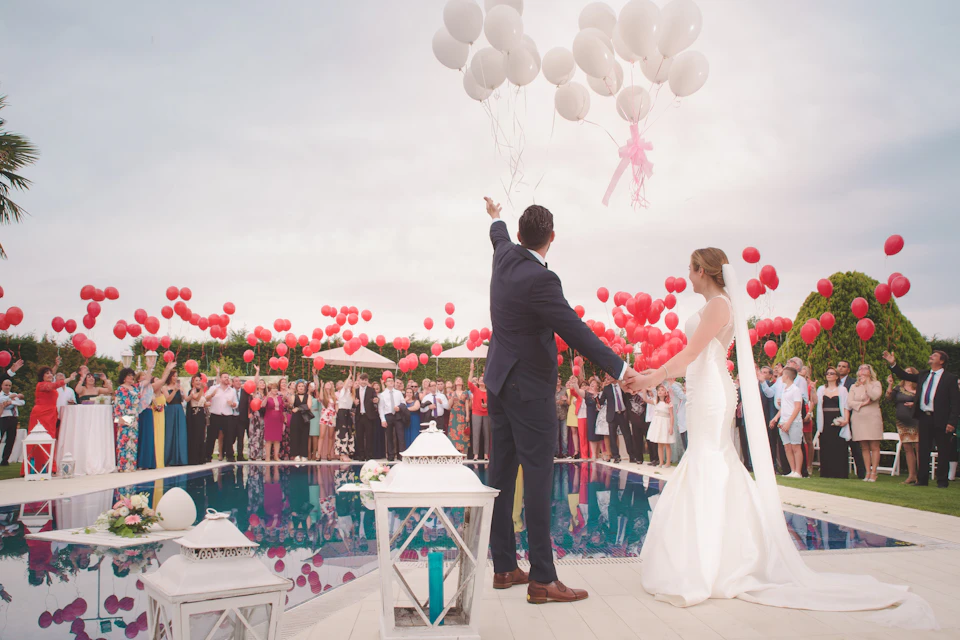
A winter wedding changes the light and the rhythm of the day. The sun sets around 5 pm, which moves the couple session earlier and gives golden images in mid-afternoon. The party happens indoors, closer and often more intimate. Venues are also easier to book.
When a couple tells me “we’re getting married in December,” I smile. Because winter weddings have an intimacy that summer weddings never will.
Golden light, earlier
In summer, you have to wait until nine in the evening for the light to become beautiful. In winter, it’s golden from three in the afternoon. The shadows are long, the light is soft, and every image has that natural warmth no filter can reproduce.
This changes something important for video. In summer, the best light falls during dinner, when everyone is at the table. In winter, it falls in the middle of the afternoon, when you’re available. You enjoy the best hour of the day without having to leave your guests.
The typical timeline of a winter wedding
Everything revolves around sunset, around 5 pm in December and January. Here is the schedule that works best, based on what I’ve filmed.
| Time | What happens | Why at that point |
|---|---|---|
| 10 am to 12 pm | Preparations | Daylight in the room, no stress |
| 12:30 pm | Town hall or first look | Light still high, faces well lit |
| 2 pm | Ceremony | Leaves two hours of light before dark |
| 3:30 pm | Couple session and group photos | The golden light summer makes you wait for until 9 pm |
| 4:30 pm | Cocktail indoors, in the warm | Night falls, candles take over |
| 7:30 pm | Dinner and speeches | Warm indoor light |
| 10 pm | First dance | The party, without worrying about the time |
A summer wedding follows the sun until 10 pm. A winter wedding has finished its outdoor part by 4:30 pm. That’s not a constraint, it’s a different rhythm. The evening starts earlier and lasts longer.
The intimacy of interiors
Candles, fireplaces, chandeliers. In winter, the party is lived indoors. Faces are lit by warm light. Embraces last longer. Coats over shoulders, hands warming up: all of it creates images of rare tenderness.
What it changes for video
Many couples think a videographer needs sunshine. That’s wrong. I need light, and winter offers a very beautiful one, just for less time.
Indoors, I never add lighting. My camera, a Sony FX3, is made for dim atmospheres. It keeps the warmth of candles and the grain of firelight without flattening them. A room lit with fairy lights and tea lights gives far softer images than full July sun.
For sound, winter is even an ally. No wind on the microphones during the vows. Ceremonies take place in closed rooms, where voices carry. The directional microphone picks up laughter without the background noise of an outdoor cocktail.
The only real point to watch is timing. If the ceremony starts at 4 pm in December, the couple session will happen at night. It’s possible, but it’s a different aesthetic. Hence the importance of building the timeline around the light, and not only around the town hall’s availability.
The colours
Late autumn offers russets and golds. Winter offers deep greens, dramatic skies, and sometimes mist. These atmospheres give films an almost dreamlike quality.
Think about it for your outfits and your decoration. A wool coat, a shawl, warm tones: everything that protects you from the cold appears on screen and gives it character. Couples who embrace winter in their choices get the most coherent films.
Fewer people, more attention
Winter weddings are often more intimate. Fewer guests, more closeness. Every look counts more. Every word carries further. And in the film, you can feel it.
With forty guests rather than a hundred and fifty, I also have time to film each table, each conversation, each embrace at the door. Nobody gets lost in the crowd. The film ends up with more faces you know, and fewer wide shots of people you’ll struggle to name in ten years.
Venues and vendors that are easier to book
That’s the practical advantage. Between November and March, venues have free dates, and sometimes different conditions from high season. So do vendors. You can choose your photographer, your caterer and your videographer more calmly, without chasing a Saturday in July.
For my part, a winter date is usually booked six to eight months ahead, instead of ten to twelve for summer. That leaves time to do things properly.
Weddings between Christmas and New Year
Many couples choose this week because the family is already together and everyone is off work. It’s a very good idea for the film: the decorations are already up, the venues are warm, and the guests are relaxed.
Two precautions all the same. Check the town hall’s opening hours, often reduced over the holidays. And warn your vendors early, because some close during this period. On my side, I’m happy to film a wedding on 30 December. You just need to tell me in time.
The winter wedding checklist
- Schedule the ceremony before 2:30 pm to keep some light afterwards.
- Ask the venue how the ceremony room and the cocktail space are heated.
- Plan a cloakroom, and a place where coats don’t end up in a pile on the chairs.
- Multiply warm light sources: candles, fairy lights, lamps. Avoid neon.
- Plan a rain option for the group photos, under a glass roof or a covered yard.
- Keep ten minutes outside for the couple session, whatever the weather.
- Think about hot drinks at the cocktail: they make beautiful images, and good memories.
The advice I always give
Don’t be afraid of rain. Or of the cold. The most beautiful films I’ve made were shot under grey skies. Because what matters isn’t the sky: it’s what happens between the two of you.
If you want to see what late-afternoon winter light looks like, watch a few films and look for the indoor scenes. Then tell me about your plans, even if they fall on a Tuesday in January.
Frequently asked questions
What time should we plan the ceremony for a winter wedding?
As early in the afternoon as possible. A 2 pm ceremony leaves time for the couple session and the group photos before sunset, around 5 pm. If the town hall does not offer a slot early enough, do it the day before or in the morning, and keep the afternoon for the outdoor ceremony and the light.
Is there enough light to film indoors in winter?
Yes. I film with a Sony FX3, a camera that handles low light very well, and I never add lighting. Candles, fairy lights, a fireplace and chandeliers are enough, and they give warm images that summer cannot offer. The only thing to avoid: a room lit solely by white neon tubes on the ceiling.
Should we plan an outdoor couple session when it is cold?
Yes, but a short one. Ten minutes outside in the low late-afternoon light are enough for superb images. Bring a coat you love, it will appear on screen. And keep an indoor option, near a large window, in case wind or rain turn up. See how it looks in my films.
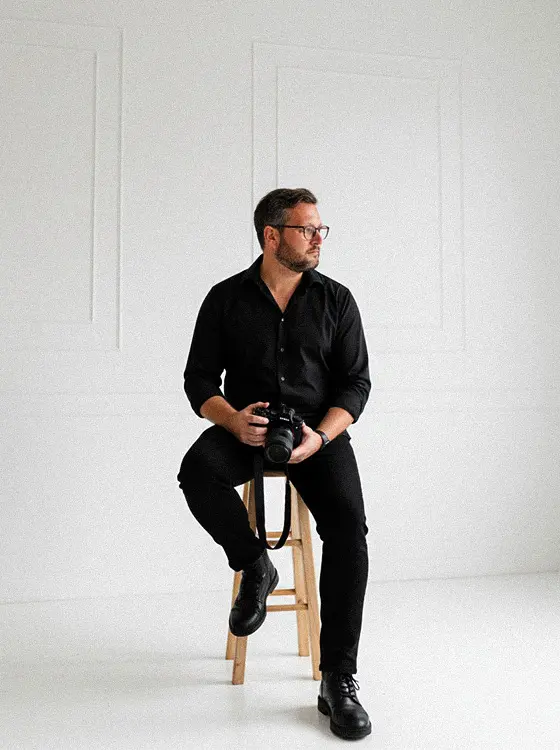
Mickaël Frigout
Wedding videographer based in Nantes. Over 70 weddings filmed in 5+ years. I tell love stories through images, with discretion and sensitivity.